SUBLIME Workshop fatigue

A Workshop on fatigue and dynamic loading: Unveiling Challenges and New Frontiers in Steel Bridge Health Monitoring

LinkedIn
Email
Twitter
Telegram
WhatsApp

Introduction

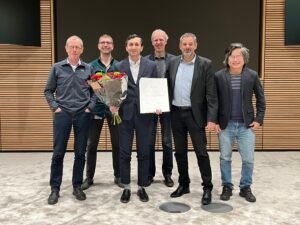
On November 8, 2023, the SUBLIME project marked a crucial milestone by hosting an insightful workshop in collaboration with esteemed industrial (ArcelorMittal, ARUP, BmS, ct de Boer, DDC, Inertia Technology, Municipality Amsterdam, Province Zuid Holland, Royal HaskoningDHV, Rijkswaterstaat, Somni Solutions) and academic partners (TU Delft, TU/e and U Twente). As the workshop participants delved into intricate details and innovative technologies, it is essential to revisit the overarching goals of the SUBLIME project. The SUBLIME consortium aims to extend the safe lifespan of steel infrastructures, reduce costs, enhance circularity and support the transition towards a sustainable future. Until today, most studies have focused on specific components, but have not succeeded in generating Digital Twins applicable to a wider range of comparable and complete steel infrastructures. SUBLIME aims to develop data handling techniques and next generation Structural Prediction Models that allow for the integration of Structural Health Monitoring to analyse the current state, thereby reducing the degradation uncertainty, and to predict the future state at a target reliability set by legislation.

Structural health monitoring takes center stage in this endeavor. It is a vital aspect of modern infrastructure management, providing real-time insights into the condition of structures. It is the proactive guardian that alerts asset owners to potential issues, ensuring safety and preventing unforeseen consequences. The structural integrity of steel infrastructures, while robust, faces a frightening enemy – degradation through fatigue or corrosion. Degradation problems pose a significant challenge to the prolonged use of structures, often leading to unexpected failures. As steel components in bridges endure the constant stress of constantly increasing vehicular loads, environmental factors, and the material degradation over the time, understanding and mitigating fatigue becomes paramount for ensuring their sustained functionality and safety.

Digital Twins emerged as a key theme in the workshop discussions, presenting an innovative approach to structural health monitoring. The concept involves creating a virtual replica of a physical structure, providing real-time insights into its behaviour. This technology not only facilitates more accurate assessments but also opens avenues for predictive maintenance, reducing downtime and improving overall efficiency.

The Workshop Setting

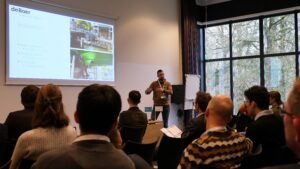
Nestled in the physical and digital realm and hosted graciously by ct de Boer, the workshop convened at the crossroads of innovation of academic team and practicality of industrial companies. It brought together leading experts, researchers, and technology providers, all navigating the complexities of the steel infrastructure landscape. The meeting space provided a platform for insightful discussions on the challenges and opportunities encountered by the industry.

Key Presentations: Insights from Current Practices

One of the highlights of the workshop was a presentation by Royal HaskoningDHV on behalf of engineering companies involved in the project, which delved into the current state-of-the-art methodologies for bridge maintenance and health monitoring. Drawing from the NEN guidelines, the presentation outlined a structured approach encompassing desk studies, structural inspections, calculations, and measurements. The crucial role of Finite Element Models (FEM) in structural assessments was emphasized, shedding light on both global and hybrid models.

A critical aspect that emerged during the workshop discussions was the challenge of fatigue in steel bridges. The cyclic loading and unloading of these structures over time, vibrations occurring in three directions can lead to cracks and failures. Experts highlighted the importance of understanding and mitigating fatigue to ensure the long-term integrity of steel infrastructures. Strategies for fatigue assessment and management were explored, underlining the need for continuous monitoring and preventive measures.

Key Presentations: Cutting-edge Technologies

The workshop featured presentations from technology providers, including Dutch Drone Company, Inertia Technology, Somni Solutions and ct de Boer, showcasing the latest developments in unmanned aerial services, wireless inertial measurement units, and fiber optic sensor solutions. DDC demonstrated the power of drone technology combined with AI analytics for real-time inspections, while Inertia’s focus on distributed solutions offered insights into motion and vibration monitoring. Real-world applications were illustrated through case studies, such as the monitoring of viaduct A1 Naarden and the optimization of an expansion joint construction in the road surface of Houtense brug. The collaboration between Somni and ct de Boer presented innovative solutions, including load cells and extensive infrastructure monitoring projects.

Group Discussions

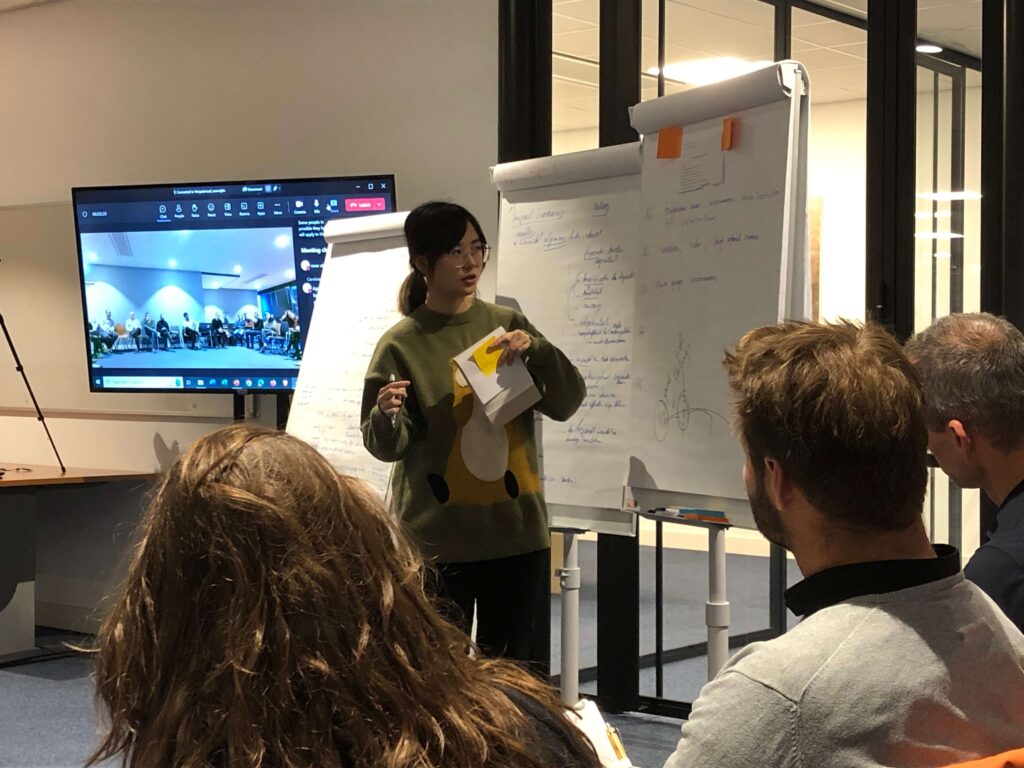
The latter part of the workshop was dedicated to focused group discussions, where participants engaged in deep-dive conversations on three key topics:

  • Dynamic Behavior Measurement: exploring the sensors needed for dynamic bridge behavior measurement, both for remote monitoring and in-situ inspection. The role of Computer Vision in monitoring and inspection, along with challenges faced, sparked insightful conversations.
  • Digital Twin Implementation: addressed available components, desired outcomes, interaction methods, data usage, update frequencies, and the challenges faced in the implementation process.
  • Inspection Strategies and Improvements: covering inspection frequencies, methods, objectives, and challenges. The incorporation of sensors and remote sensing in inspections was a recurrent theme, laying the groundwork for future advancements.

Looking Ahead

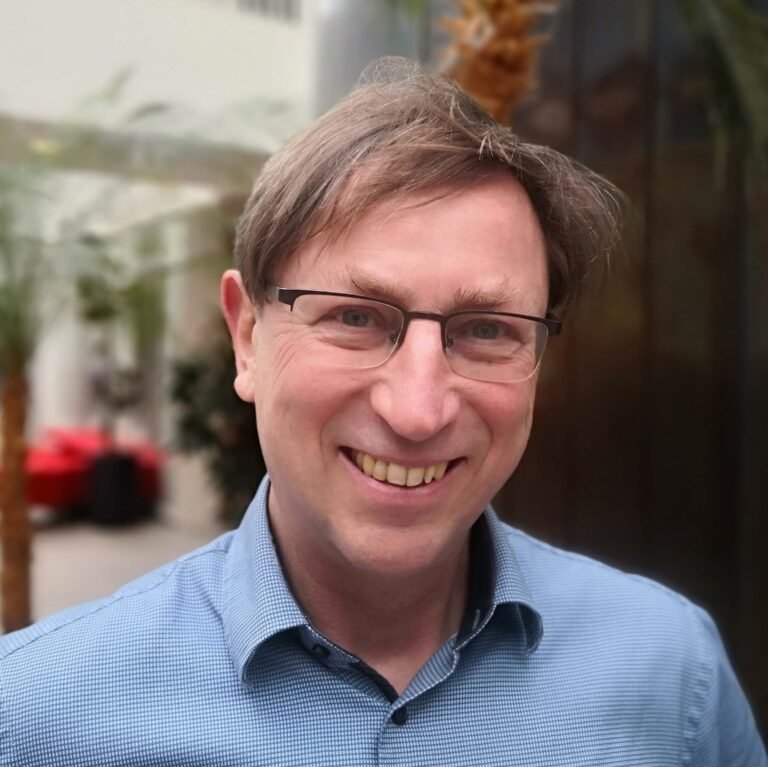
The SUBLIME project workshop on fatigue and dynamic loading concluded with a sense of optimism and purpose. The amalgamation of theoretical insights, technological showcases, and collaborative discussions set the stage for a transformative journey towards sustainable, reliable, and circular steel infrastructures. As the SUBLIME project progresses, the workshop’s outcomes will serve as a compass, guiding the consortium towards innovative solutions. The exchange of ideas and expertise has not only illuminated the current landscape but has also sown the seeds for future breakthroughs. In the words of Paul Havinga, WP2 leader, 

"This workshop was not just a meeting. We got a lot of insights on the current practices and possibilities for steel bridges health monitoring, which gave us very valuable insights that we can translate into innovative solutions addressing the needs of the stakeholders. The journey has just begun, and the path ahead is paved with possibilities".

Paul Havinga
deBoer logo

SUBLIME partners are grateful to ct de Boer for hosting the event and providing facilities for fruitful meeting.

Dissemination

CT de Boer Showcases SUBLIME Fieldwork at the 2025 M2i Conference

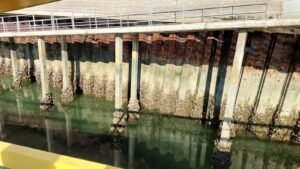
During the 2025 M2i Conference at Papendal, Anton Gorter of Civiele Technieken de Boer presented the progress of SUBLIME’s field monitoring work on the Van Hall Bridge in Amsterdam. His talk, “An on-site measurement campaign – it sounds so simple” highlighted the many practical steps and unforeseen challenges involved in collecting high-quality strain data on a historic movable steel bridge.
Read More »
Dissemination

Sheet Pile Corrosion Study Begins

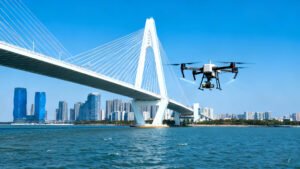
The SUBLIME project is taking a major step forward in understanding how steel sheet piles age in real port conditions. In close collaboration with North Sea Port (NSP), TU Delft researcher Prasaanth Ravi Anusuyadevi is preparing the installation of a new field-testing structure that will allow long-term monitoring of corrosion processes on S355 steel.
Following recent discussions between TU Delft and NSP, both partners agreed to install a dedicated sample-carrying structure directly in the port. The design includes three identical frames, each hosting nine steel samples and each intended for different exposure durations: 3 months, 6 months and 1 year. The samples will be positioned at different depths along the waterline to capture how corrosion varies from splash zone to full immersion.
Read More »
Dissemination

Smarter Cameras from Fewer Views — A Sparse-View Pose Estimation

How do you recreate a 3D scene using just a few pictures from different angles? That’s a challenge many fields face — from drone-based inspections to 3D mapping for remote sensing or structural health monitoring. Qingyu Xian, PhD researcher at the University of Twente, is tackling this challenge head-on in the SUBLIME project with a novel tool that’s already showing strong results: the T-Graph module.
Read More »
Dissemination

Smarter Testing for Steel Bridges: How Few Tests Can Tell Us More

Many steel bridges across Europe are reaching the end of their intended service lives, raising critical questions about how to assess and extend their safe use. Within the SUBLIME program (“Sustainable and Reliable Macro Steel Infrastructures”), our mission is to ensure that these critical structures remain safe, sustainable, and serviceable for decades to come. One of the program’s key objectives is developing smarter assessment tools that help us better understand the condition of ageing steel — particularly when data is limited. That’s where the work of Elena Zancato, PhD researcher at Eindhoven University of Technology (TU/e), comes into focus.

Read More »
SUBLIME
Meetings

WP3 Progress Meeting and Workshop on Sustainable and Reliable Steel Infrastructure

On 11 September 2025, the SUBLIME consortium convened at Leiden University for the WP3 progress meeting and workshop on sustainable and reliable steel infrastructure. Presentations by PhD researcher Faysal Tareq (Leiden University, CML) and Mic Barendsz (Bouwen met Staal) addressed material flows, carbon emissions, and circular design strategies. In the afternoon, Dr. Mohammad Hamida (TU Delft) led an interactive workshop exploring technical, environmental, economic, legal, and social challenges, and identifying possible solutions. The event highlighted the importance of combining material analysis, design practice, and governance perspectives to guide the transition toward circular and climate-resilient steel infrastructures.

Read More »
Dissemination

Ali Sabzi to Present SUBLIME Research at IEEE SmartNets 2025 in Istanbul

On March 21, 2025, the SUBLIME project consortium gathered for its 2nd Annual User Committee Meeting. Hosted by North Sea Port (NSP) at its Vlissingen premises, the meeting brought together over 30 representatives from research institutions, industry partners, government bodies, and funding agencies to reflect on progress, share research outcomes and explore pathways for future collaboration.
The day featured presentations from PhD and EngD researchers, discussions on key user cases and a site-specific boat tour through the North Sea Port, highlighting the real-world relevance of the project’s themes—fatigue, corrosion, digital monitoring and infrastructure sustainability.

Read More »

1 thought on “A Workshop on fatigue and dynamic loading: Unveiling Challenges and New Frontiers in Steel Bridge Health Monitoring”

  1. Fascinating results! These workshops definitely foster a collaborative learning environment, promoting meaningful discussions and fruitful outcomes. Excited for the remaining trajectory of this project!

Leave a Reply to Laura Cancel Reply

Your email address will not be published. Required fields are marked *

Scroll to Top