Smarter Cameras from Fewer Views — A Sparse-View Pose Estimation

LinkedIn
Email
Twitter
Telegram
WhatsApp

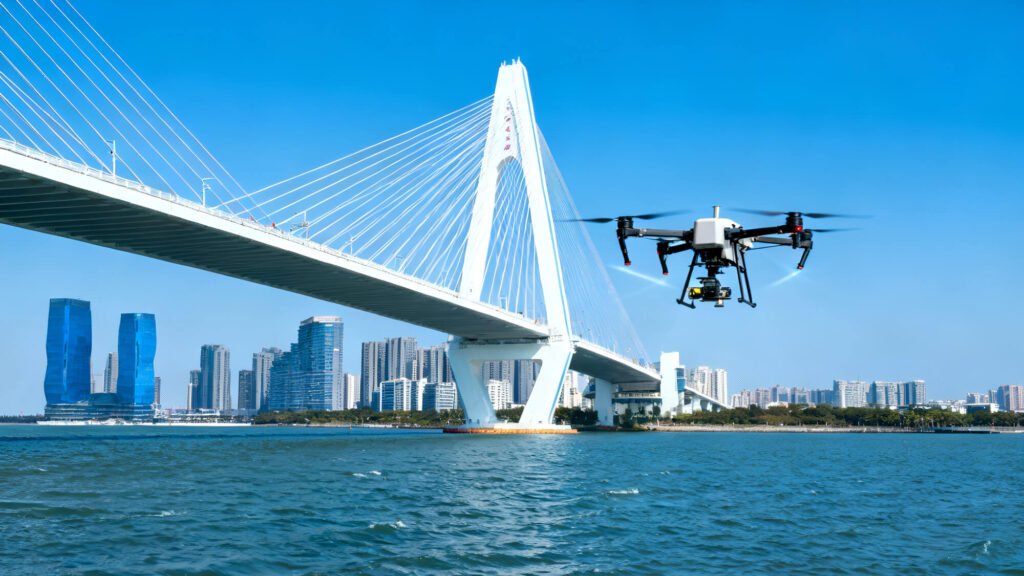
How do you recreate a 3D scene using just a few pictures from different angles? That’s a challenge many fields face — from drone-based inspections to 3D mapping for remote sensing or structural health monitoring. Qingyu Xian, PhD researcher at the University of Twente, is tackling this challenge head-on in the SUBLIME project with a novel tool that’s already showing strong results: the T-Graph module.

The Problem: Sparse Images, Uncertain Positions
Modern pose estimation techniques typically rely on large sets of images to determine where cameras were placed in space. But in many practical settings, you only have a handful of views. Traditional methods struggle when faced with fewer images and little overlap between them. Without enough information, they lose accuracy fast — especially in determining where each camera was located, a key ingredient for accurate 3D reconstructions.

The Solution: T-Graph Adds Missing Links
Xian’s innovation, T-Graph, offers a fresh way to improve camera pose estimation when only a few views are available. Instead of relying only on each camera’s position relative to a central point, T-Graph creates a network — or graph — where each pair of cameras is linked by a line that represents their relative translation. This network taps into overlooked information between image pairs, adding valuable constraints that sharpen the overall pose estimation.

Even better? T-Graph is designed as a plug-and-play module, which can be added to existing models like RelPose++ and Forge without changing how they run during testing. It works during training only, guiding the model to better understand spatial relationships — and then steps aside, leaving no extra load at runtime.

Two Paths to Better Accuracy
The research also introduces two smart ways to model the relationships between camera pairs:

  • Relative-t: Defines where one camera is in relation to another.
  • Pair-t: Uses the point where two cameras’ lines of sight intersect as a common reference.

Depending on how the cameras are arranged — whether mostly looking at the same point or facing in parallel directions — one method may outperform the other. Experiments show that pair-t works best when cameras are arranged around a central object, while relative-t is better for more loosely aligned views, like tourist photos from random angles.

The team tested T-Graph on two public datasets — CO3D and IMC PhotoTourism — using two different model architectures. Across the board, adding T-Graph improved pose estimation performance, particularly for camera center accuracy, which jumped by up to 6% in some settings. Notably, T-Graph added just 5–11% to model size during training, showing that major gains don’t require massive complexity.

Figures from the publication (see pages 21–22) visually confirm the improvement: camera positions predicted with T-Graph (blue) more closely align with the ground truth (green) compared to predictions made without it (red).

Why It Matters for SUBLIME
SUBLIME aims to support smarter, more data-efficient monitoring of steel infrastructure. T-Graph fits perfectly into that vision — enabling accurate 3D reconstruction and localization with fewer images, and paving the way for lighter, faster, and more cost-effective inspection strategies, especially when using UAVs or other mobile imaging systems.

It’s a reminder that smart structure isn’t just about steel — sometimes it’s about the code behind the camera.

Interested to know more?
Read Qingyu Xian’s full peer-reviewed publication here: https://doi.org/10.1016/j.isprsjprs.2025.08.031

SUBLIME
Meetings

WP3 Progress Meeting and Workshop on Sustainable and Reliable Steel Infrastructure

On 11 September 2025, the SUBLIME consortium convened at Leiden University for the WP3 progress meeting and workshop on sustainable and reliable steel infrastructure. Presentations by PhD researcher Faysal Tareq (Leiden University, CML) and Mic Barendsz (Bouwen met Staal) addressed material flows, carbon emissions, and circular design strategies. In the afternoon, Dr. Mohammad Hamida (TU Delft) led an interactive workshop exploring technical, environmental, economic, legal, and social challenges, and identifying possible solutions. The event highlighted the importance of combining material analysis, design practice, and governance perspectives to guide the transition toward circular and climate-resilient steel infrastructures.

Read More »
Dissemination

Ali Sabzi to Present SUBLIME Research at IEEE SmartNets 2025 in Istanbul

On March 21, 2025, the SUBLIME project consortium gathered for its 2nd Annual User Committee Meeting. Hosted by North Sea Port (NSP) at its Vlissingen premises, the meeting brought together over 30 representatives from research institutions, industry partners, government bodies, and funding agencies to reflect on progress, share research outcomes and explore pathways for future collaboration.
The day featured presentations from PhD and EngD researchers, discussions on key user cases and a site-specific boat tour through the North Sea Port, highlighting the real-world relevance of the project’s themes—fatigue, corrosion, digital monitoring and infrastructure sustainability.

Read More »
SIBLIME: Digital Twin workshop
Dissemination

Pioneering the Future of Bridge Maintenance: Highlights from the SUBLIME Digital Twin Workshop

On March 21, 2025, the SUBLIME project consortium gathered for its 2nd Annual User Committee Meeting. Hosted by North Sea Port (NSP) at its Vlissingen premises, the meeting brought together over 30 representatives from research institutions, industry partners, government bodies, and funding agencies to reflect on progress, share research outcomes and explore pathways for future collaboration.
The day featured presentations from PhD and EngD researchers, discussions on key user cases and a site-specific boat tour through the North Sea Port, highlighting the real-world relevance of the project’s themes—fatigue, corrosion, digital monitoring and infrastructure sustainability.

Read More »

Add Your Heading Text Here

Leave a Comment

Your email address will not be published. Required fields are marked *

Scroll to Top