

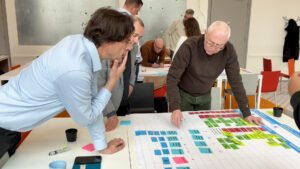
SUBLIME workshop at TU Delft builds on earlier insights
On 1 April 2026, TU Delft hosted a follow-up workshop on Sustainable and Reliable Steel Infrastructures, continuing the work started during the first SUBLIME workshop held in September 2025 at Leiden University. The workshop focused on the challenges, solutions and stakeholders associated with the sustainable and reliable operation and governance of steel infrastructures.
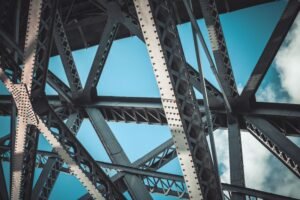
New study helps identify effective monitoring strategies for steel bridges
A new publication from the SUBLIME project examines how monitoring and inspection data can improve the assessment of fatigue-critical details in ageing steel bridges. Fatigue cracks can develop gradually under repeated traffic loads. Reliable information about these cracks is therefore essential for deciding whether a bridge can continue to be used safely and when maintenance is needed.
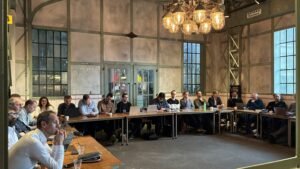
SUBLIME Annual Meeting Showcases Progress, Collaboration, and Real-World Impact
On 27 March, the SUBLIME consortium gathered for its annual user committee meeting, hosted by ProRail in a unique and inspiring setting at the Spoorwegmuseum in Utrecht. The meeting brought together academic researchers, industry partners, and infrastructure stakeholders to exchange insights, review progress, and strengthen collaboration across the project.
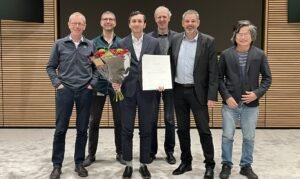
EngD Project Defence: Ali Sabzi Khoshraftar
The SUBLIME consortium is pleased to announce the successful defence of the Engineering Doctorate (EngD) project by Ali Sabzi Khoshraftar, who presented his work on the development and evaluation of predictive digital twins for steel bridge assessment and maintenance.
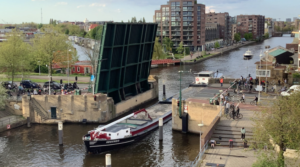
Monitoring steel bridges in practice: Van Hall Bridge featured online
The SUBLIME consortium is pleased to see that recent monitoring campaigns at the Van Hall Bridge in Amsterdam are now featured in an online article and video published by Aan de Gracht(en) Amsterdam. The publication highlights how in-depth monitoring of steel bridges contributes to a better understanding of their condition, vulnerabilities, and long-term performance.
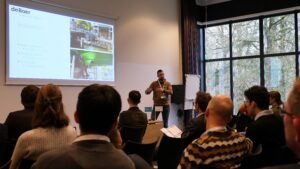
CT de Boer Showcases SUBLIME Fieldwork at the 2025 M2i Conference
During the 2025 M2i Conference at Papendal, Anton Gorter of Civiele Technieken de Boer presented the progress of SUBLIME’s field monitoring work on the Van Hall Bridge in Amsterdam. His talk, “An on-site measurement campaign – it sounds so simple” highlighted the many practical steps and unforeseen challenges involved in collecting high-quality strain data on a historic movable steel bridge.