
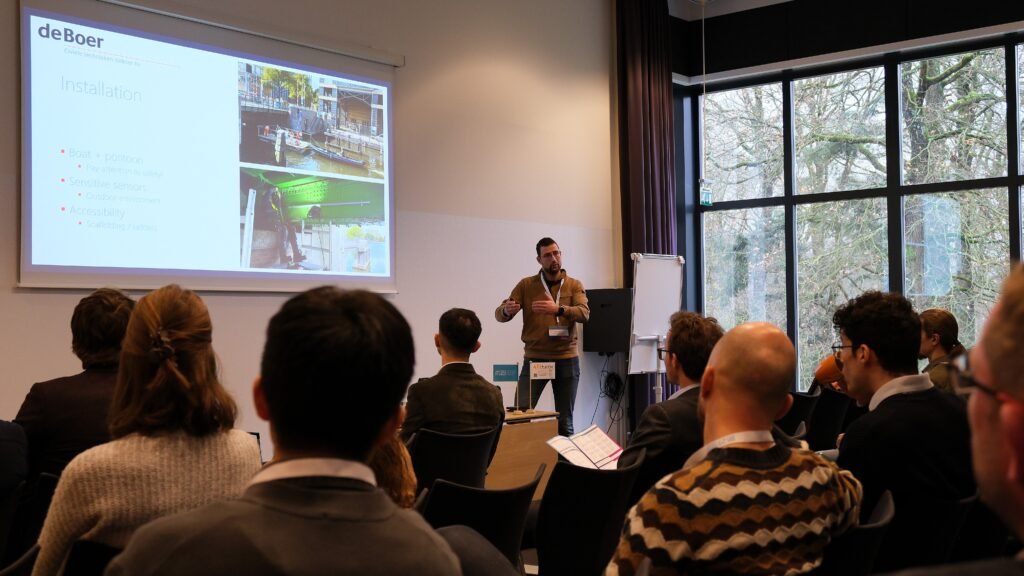
During the 2025 M2i Conference at Papendal, Anton Gorter of Civiele Technieken de Boer presented the progress of SUBLIME’s field monitoring work on the Van Hall Bridge in Amsterdam. His talk, “An on-site measurement campaign – it sounds so simple” highlighted the many practical steps and unforeseen challenges involved in collecting high-quality strain data on a historic movable steel bridge.
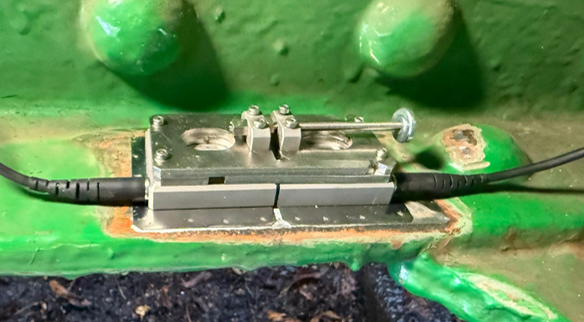
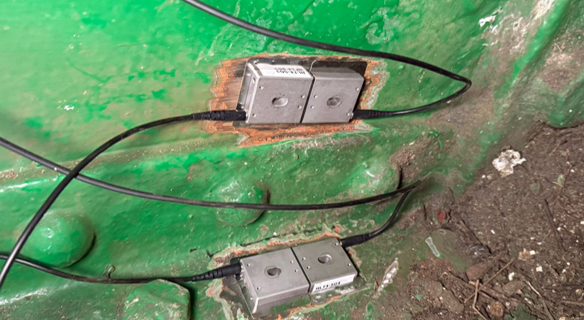
The Van Hall Bridge, a steel movable bridge dating from 1931, serves as one of the key field testing locations within SUBLIME. Although the central question sounded straightforward—can strain measurements be performed on the bridge?—the process revealed how many decisions and preparations stand behind a single monitoring campaign. Working with the SUBLIME research teams, the engineering company Arup first identified the fatigue-sensitive details that required attention: the main girders, affected by opening and closing cycles, and the front cross-girder, which experiences bending from traffic. With these targets defined, the team developed a detailed measurement plan covering sensor types, positions, cable routing, and coordinated data acquisition at 1000 Hz.
Challenges Beneath the Surface
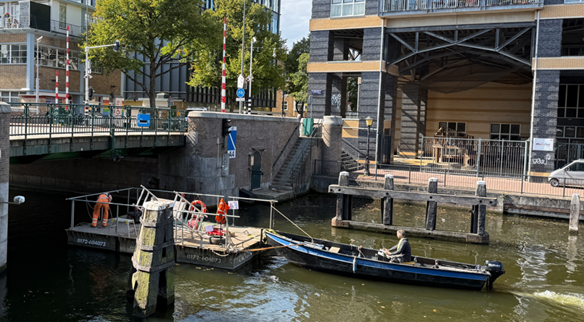
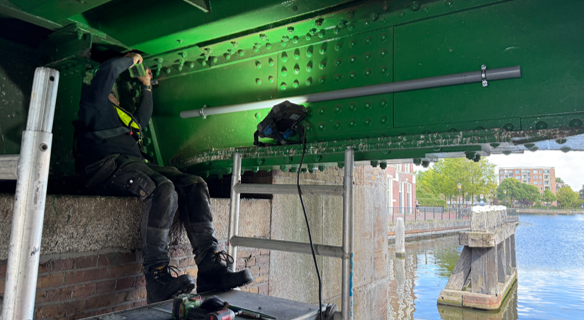
Much of the work took place in conditions that standard engineering drawings never show. The bridge is accessible only from the water, located on a busy Amsterdam shipping route, which required installation teams to work from a boat and pontoon under strict safety measures. Multiple permits had to be arranged—covering waterway use, environmental conditions, traffic measures, and entry into the bascule cellar. Even gaining access to the cellar was a process of its own, as Amsterdam protects the keys to its bridges with great care.
Elena Zancato Wins Best Innovative Research Award at M2i Annual Conference 2024
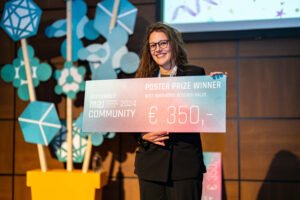
Elena Zancato, a PhD researcher within the SUBLIME project, has been awarded the Best Innovative Research prize at the MaterialenNL Conference 2024, held at the National Sports Centre Papendal, Arnhem. Elena’s work integrates real-time Structural Health Monitoring (SHM) data with predictive models, offering safer and more sustainable infrastructure management solutions. Her achievement underscores the significance of her contributions to extending infrastructure life spans, reducing waste, and supporting circular economy goals.
Bridges to a Circular Society
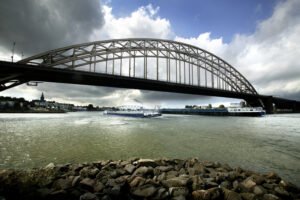
We are excited to announce the publication of Karel Van den Berghe on circular economy strategies for large steel structures, part of the SUBLIME project. It is now available on “De Lichtkogel.nl,” delve into sustainable practices for infrastructure, focusing on the lifecycle extension of steel bridges through innovative technologies and design. This publication marks a significant step towards integrating circularity into infrastructure planning.
In Memoriam: Professor Paul Havinga
We are deeply saddened to announce the unexpected passing of Prof. Dr. Ing. Paul Havinga on May 3, 2024. A distinguished figure in computer science, Professor Havinga was a cornerstone of the University of Twente’s Pervasive Systems group and a driving force within the SUBLIME project. His leadership in Work Package 2, focusing on the development of a data platform and digital twins for steel infrastructures, was instrumental in advancing the project’s objectives.