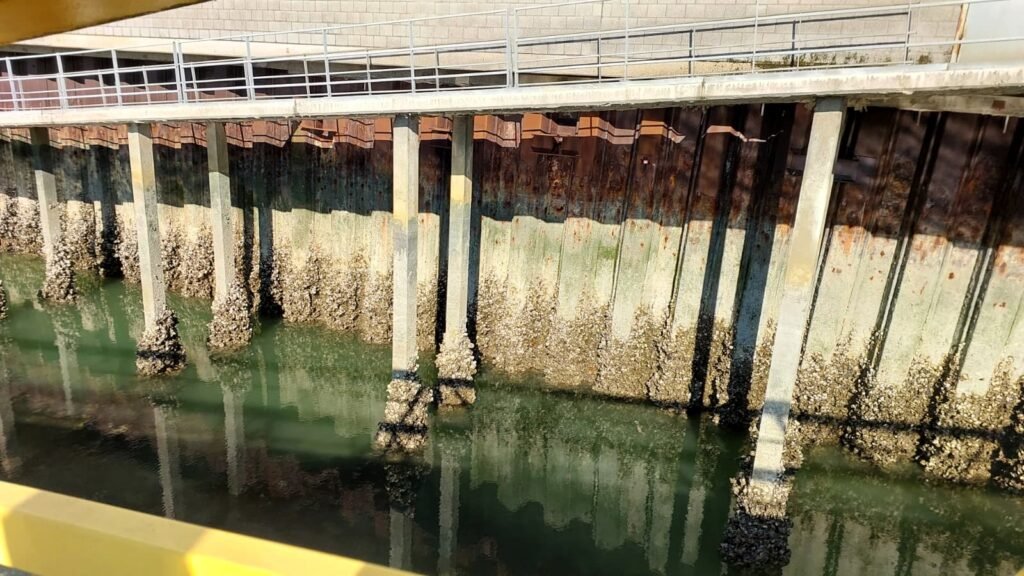

The SUBLIME project is taking a major step forward in understanding how steel sheet piles age in real port conditions. In close collaboration with North Sea Port (NSP), TU Delft researcher Prasaanth Ravi Anusuyadevi is preparing the installation of a new field-testing structure that will allow long-term monitoring of corrosion processes on S355 steel.
Following recent discussions between TU Delft and NSP, both partners agreed to install a dedicated sample-carrying structure directly in the port. The design includes three identical frames, each hosting nine steel samples and each intended for different exposure durations: 3 months, 6 months and 1 year. The samples will be positioned at different depths along the waterline to capture how corrosion varies from splash zone to full immersion.
Depending on fabrication progress and the final installation permit, the first structure will be placed in early January 2026. Once the setup is in place, Prasaanth will share installation photos and first observations with the consortium by the next following consortium meeting.
At the same time, the lab-based corrosion study is progressing steadily. The first dataset — representing three months of controlled exposure — is expected in December 2025, with results to follow shortly after.
This field lab is part of Work Package 1 and strengthens the project’s ability to connect laboratory insights with real-world behaviour of steel structures in marine conditions.
Local coordination at North Sea Port is supported by Gerard Verburg (NSP).
More updates coming as the installation proceeds

Smarter Testing for Steel Bridges: How Few Tests Can Tell Us More
Many steel bridges across Europe are reaching the end of their intended service lives, raising critical questions about how to assess and extend their safe use. Within the SUBLIME program (“Sustainable and Reliable Macro Steel Infrastructures”), our mission is to ensure that these critical structures remain safe, sustainable, and serviceable for decades to come. One of the program’s key objectives is developing smarter assessment tools that help us better understand the condition of ageing steel — particularly when data is limited. That’s where the work of Elena Zancato, PhD researcher at Eindhoven University of Technology (TU/e), comes into focus.
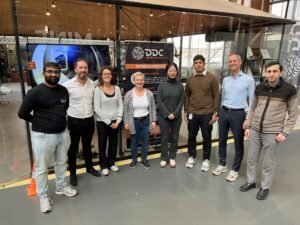
Researchers Get-Together-Day at DDC
On 9 October 2025, researchers from the SUBLIME project came together to explore how digital twins and drones can make our steel infrastructures more sustainable and reliable. The Get Together Day featured visits to the Dutch Drone Company (DDC) and the RDM innovation campus in Rotterdam — connecting research with real-world innovation and strengthening collaboration within the SUBLIME community.

WP3 Progress Meeting and Workshop on Sustainable and Reliable Steel Infrastructure
On 11 September 2025, the SUBLIME consortium convened at Leiden University for the WP3 progress meeting and workshop on sustainable and reliable steel infrastructure. Presentations by PhD researcher Faysal Tareq (Leiden University, CML) and Mic Barendsz (Bouwen met Staal) addressed material flows, carbon emissions, and circular design strategies. In the afternoon, Dr. Mohammad Hamida (TU Delft) led an interactive workshop exploring technical, environmental, economic, legal, and social challenges, and identifying possible solutions. The event highlighted the importance of combining material analysis, design practice, and governance perspectives to guide the transition toward circular and climate-resilient steel infrastructures.