
Sheet Pile Corrosion Study Begins
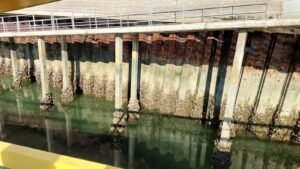
The SUBLIME project is taking a major step forward in understanding how steel sheet piles age in real port conditions. In close collaboration with North Sea Port (NSP), TU Delft researcher Prasaanth Ravi Anusuyadevi is preparing the installation of a new field-testing structure that will allow long-term monitoring of corrosion processes on S355 steel.
Following recent discussions between TU Delft and NSP, both partners agreed to install a dedicated sample-carrying structure directly in the port. The design includes three identical frames, each hosting nine steel samples and each intended for different exposure durations: 3 months, 6 months and 1 year. The samples will be positioned at different depths along the waterline to capture how corrosion varies from splash zone to full immersion.

Smarter Cameras from Fewer Views — A Sparse-View Pose Estimation
How do you recreate a 3D scene using just a few pictures from different angles? That’s a challenge many fields face — from drone-based inspections to 3D mapping for remote sensing or structural health monitoring. Qingyu Xian, PhD researcher at the University of Twente, is tackling this challenge head-on in the SUBLIME project with a novel tool that’s already showing strong results: the T-Graph module.
Smarter Testing for Steel Bridges: How Few Tests Can Tell Us More
Many steel bridges across Europe are reaching the end of their intended service lives, raising critical questions about how to assess and extend their safe use. Within the SUBLIME program (“Sustainable and Reliable Macro Steel Infrastructures”), our mission is to ensure that these critical structures remain safe, sustainable, and serviceable for decades to come. One of the program’s key objectives is developing smarter assessment tools that help us better understand the condition of ageing steel — particularly when data is limited. That’s where the work of Elena Zancato, PhD researcher at Eindhoven University of Technology (TU/e), comes into focus.