
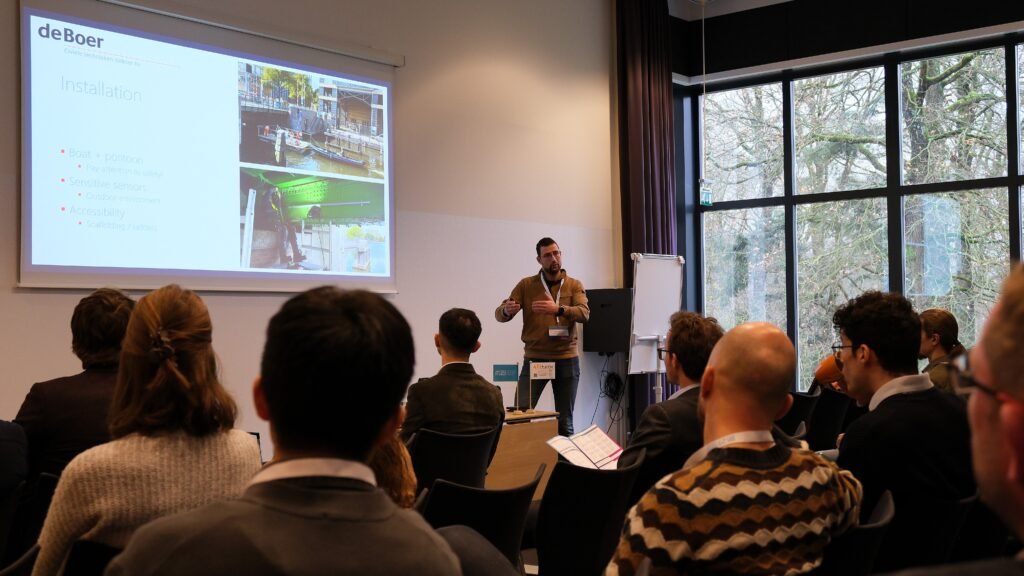
During the 2025 M2i Conference at Papendal, Anton Gorter of Civiele Technieken de Boer presented the progress of SUBLIME’s field monitoring work on the Van Hall Bridge in Amsterdam. His talk, “An on-site measurement campaign – it sounds so simple” highlighted the many practical steps and unforeseen challenges involved in collecting high-quality strain data on a historic movable steel bridge.
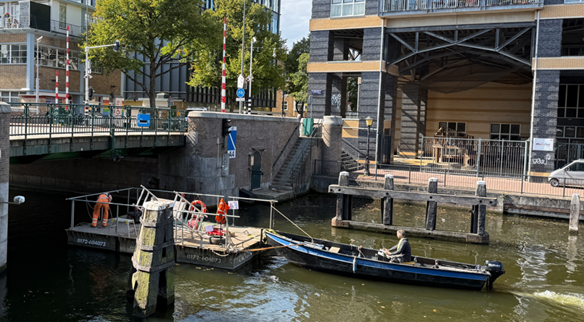
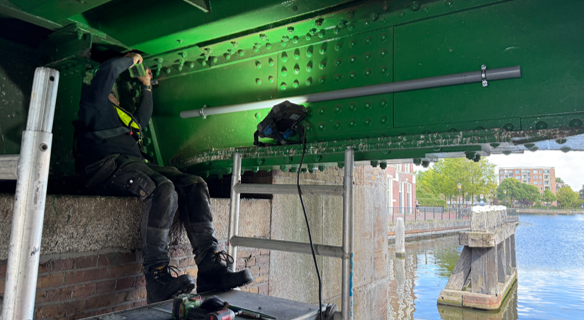
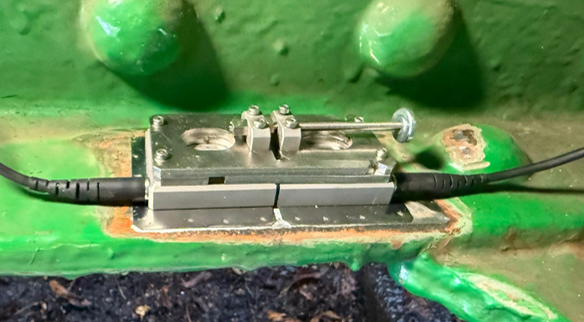
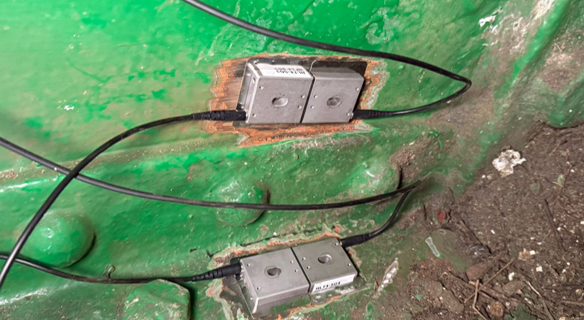
The Van Hall Bridge, a steel movable bridge dating from 1931, serves as one of the key field testing locations within SUBLIME. Although the central question sounded straightforward—can strain measurements be performed on the bridge?—the process revealed how many decisions and preparations stand behind a single monitoring campaign. Working with the SUBLIME research teams, the engineering company Arup first identified the fatigue-sensitive details that required attention: the main girders, affected by opening and closing cycles, and the front cross-girder, which experiences bending from traffic. With these targets defined, the team developed a detailed measurement plan covering sensor types, positions, cable routing, and coordinated data acquisition at 1000 Hz.
Challenges Beneath the Surface
Much of the work took place in conditions that standard engineering drawings never show. The bridge is accessible only from the water, located on a busy Amsterdam shipping route, which required installation teams to work from a boat and pontoon under strict safety measures. Multiple permits had to be arranged—covering waterway use, environmental conditions, traffic measures, and entry into the bascule cellar. Even gaining access to the cellar was a process of its own, as Amsterdam protects the keys to its bridges with great care.
Smarter Cameras from Fewer Views — A Sparse-View Pose Estimation
How do you recreate a 3D scene using just a few pictures from different angles? That’s a challenge many fields face — from drone-based inspections to 3D mapping for remote sensing or structural health monitoring. Qingyu Xian, PhD researcher at the University of Twente, is tackling this challenge head-on in the SUBLIME project with a novel tool that’s already showing strong results: the T-Graph module.
Smarter Testing for Steel Bridges: How Few Tests Can Tell Us More
Many steel bridges across Europe are reaching the end of their intended service lives, raising critical questions about how to assess and extend their safe use. Within the SUBLIME program (“Sustainable and Reliable Macro Steel Infrastructures”), our mission is to ensure that these critical structures remain safe, sustainable, and serviceable for decades to come. One of the program’s key objectives is developing smarter assessment tools that help us better understand the condition of ageing steel — particularly when data is limited. That’s where the work of Elena Zancato, PhD researcher at Eindhoven University of Technology (TU/e), comes into focus.
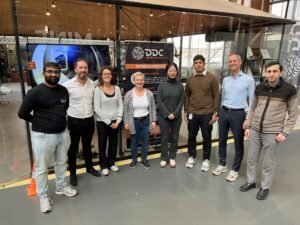
Researchers Get-Together-Day at DDC
On 9 October 2025, researchers from the SUBLIME project came together to explore how digital twins and drones can make our steel infrastructures more sustainable and reliable. The Get Together Day featured visits to the Dutch Drone Company (DDC) and the RDM innovation campus in Rotterdam — connecting research with real-world innovation and strengthening collaboration within the SUBLIME community.