
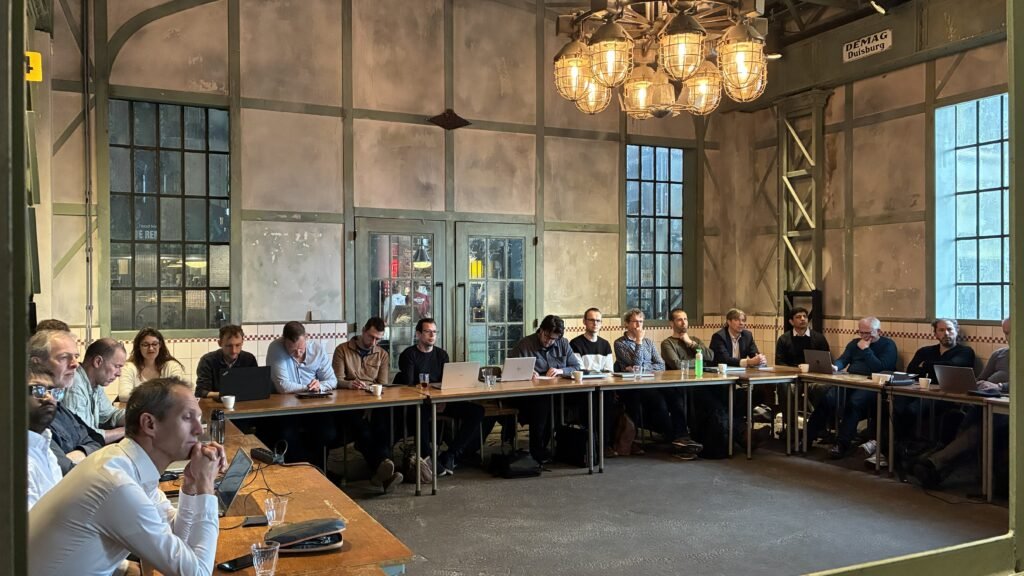
On 27 March, the SUBLIME consortium gathered for its annual user committee meeting, hosted by ProRail in a unique and inspiring setting at the Spoorwegmuseum in Utrecht. The meeting brought together academic researchers, industry partners, and infrastructure stakeholders to exchange insights, review progress, and strengthen collaboration across the project. From technical innovations to broader societal perspectives, the day demonstrated how SUBLIME is evolving from foundational research into tangible results with real-world relevance.
From Foundations to First Results
Opening the meeting, Johan Maljaars (TU/e) reflected on the current stage of the project. With most PhD candidates now well into their research, SUBLIME is transitioning from initial setup and data collection toward delivering meaningful outcomes.
This shift was clearly visible throughout the presentations. Across work packages, both researchers and industrial partners shared first results, emerging methodologies, and recent practical advancements—highlighting the increasing integration between disciplines and the growing connection to real infrastructure challenges.
Lotte Gerrits (NWO) reinforced the importance of knowledge transfer, emphasizing that real impact lies not only in scientific outputs but in how results are taken up by industry and society. Participants were encouraged to actively document and share such “knowledge transfer moments” within the consortium.
Bridging Models, Measurements, and Reality
A central theme throughout the day was the integration of measurements, models, and uncertainty.
Elena Zancato (TU/e) presented her work on fatigue reliability, showing how combining inspections, measurements, and material data can significantly improve predictions of structural performance. Her work illustrates how probabilistic methods can guide smarter decisions on monitoring and maintenance.
This was complemented by the real-world measurement campaign on the Van Hall Bridge, presented by Anton Gorter (CT de Boer). His presentation highlighted the complexity of translating theoretical measurement needs into practical field setups—dealing with access constraints, sensor placement, data volumes, and safety requirements. One key takeaway: successful monitoring requires tight collaboration between researchers, engineers, and asset owners.
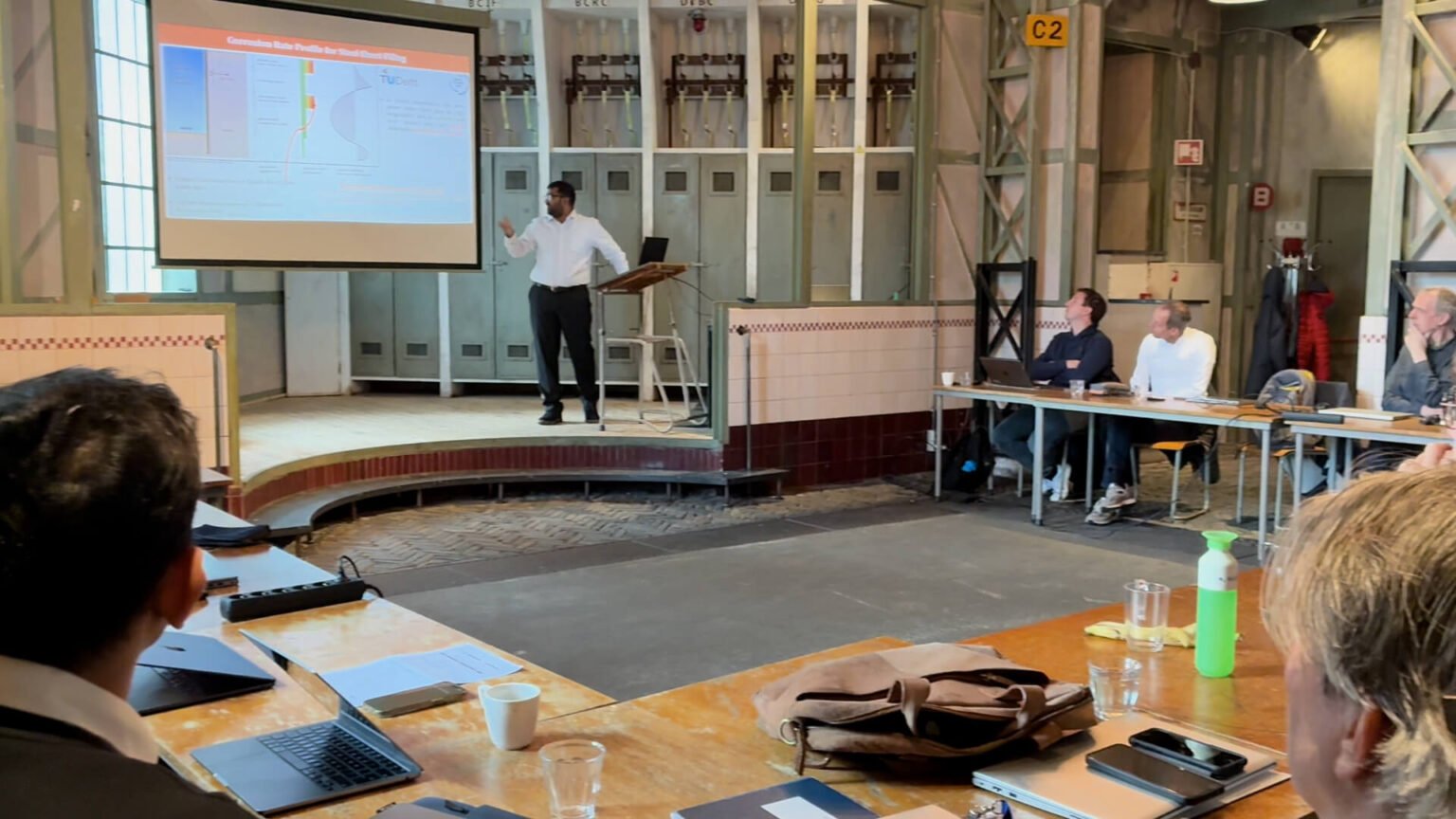
Prasaanth Ravi Anusuyadevi (TU Delft) then addressed corrosion in steel sheet piles, demonstrating how environmental conditions and exposure zones strongly influence degradation patterns. His work combines field observations, laboratory testing, and long-term exposure studies to improve predictions of remaining thickness and structural reliability.
Together, these contributions showed how SUBLIME is building a more realistic understanding of infrastructure behaviour—moving beyond simplified assumptions toward data-informed decision-making.
From Models to Scalable Tools
In the afternoon, attention shifted toward scalability and implementation.
Shuhoney Tan (Royal HaskoningDHV) presented modelling work for the North Sea Port case, focusing on sensitivity analyses of soil parameters. Her results showed that not all uncertainties matter equally—an important insight for prioritizing data collection and reducing model complexity.
Berend Jan van der Zwaag (UT) introduced developments in the digital twin platform within WP2. The platform aims to integrate sensor data, models, and user interfaces into a modular system that supports analysis, visualization, and decision-making. Notably, the work also considers human factors, such as how users interpret visual data and how tools can be adapted for users with colour vision deficiencies.
A particularly innovative contribution came from Qingyu Xian’s work (presented by Berend Jan van der Zwaag) on vision-based displacement measurement, which enables structural monitoring using video data—without requiring markers or calibration. Although still computationally demanding, this approach opens new possibilities for non-invasive monitoring.
Making Data Understandable
Remco de Bruin (Witteveen & Bos) presented a highly practical contribution: interactive dashboards for visualizing inspection and fatigue data of the Moerdijk Bridge. By linking thousands of inspection records and calculation results to a 3D model, the tool allows users to quickly identify patterns, critical locations, and trends over time. Rather than replacing engineering analysis, the dashboard enhances interpretation and communication—turning complex datasets into actionable insights.
Looking Beyond the Technical
The meeting also expanded beyond purely technical perspectives.
Faysal Tareq (Leiden University) presented a national-level analysis of infrastructure material flows, highlighting the challenges of meeting future demand while transitioning toward a circular economy. His results show that while the Netherlands performs relatively well in some areas, significant improvements are still needed—particularly for concrete.
Karel van den Berghe (TU Delft) added a governance perspective, emphasizing that infrastructure decisions are always shaped by societal context. With limited resources available for maintenance and replacement, future decisions will increasingly require prioritization—not only based on technical condition, but also on economic, social, and strategic importance.
This broader perspective sparked discussions on how SUBLIME’s technical outputs can support real-world decision-making under uncertainty.
A Journey Through Railway History
In addition to the technical programme, participants enjoyed a guided tour through the Spoorwegmuseum.
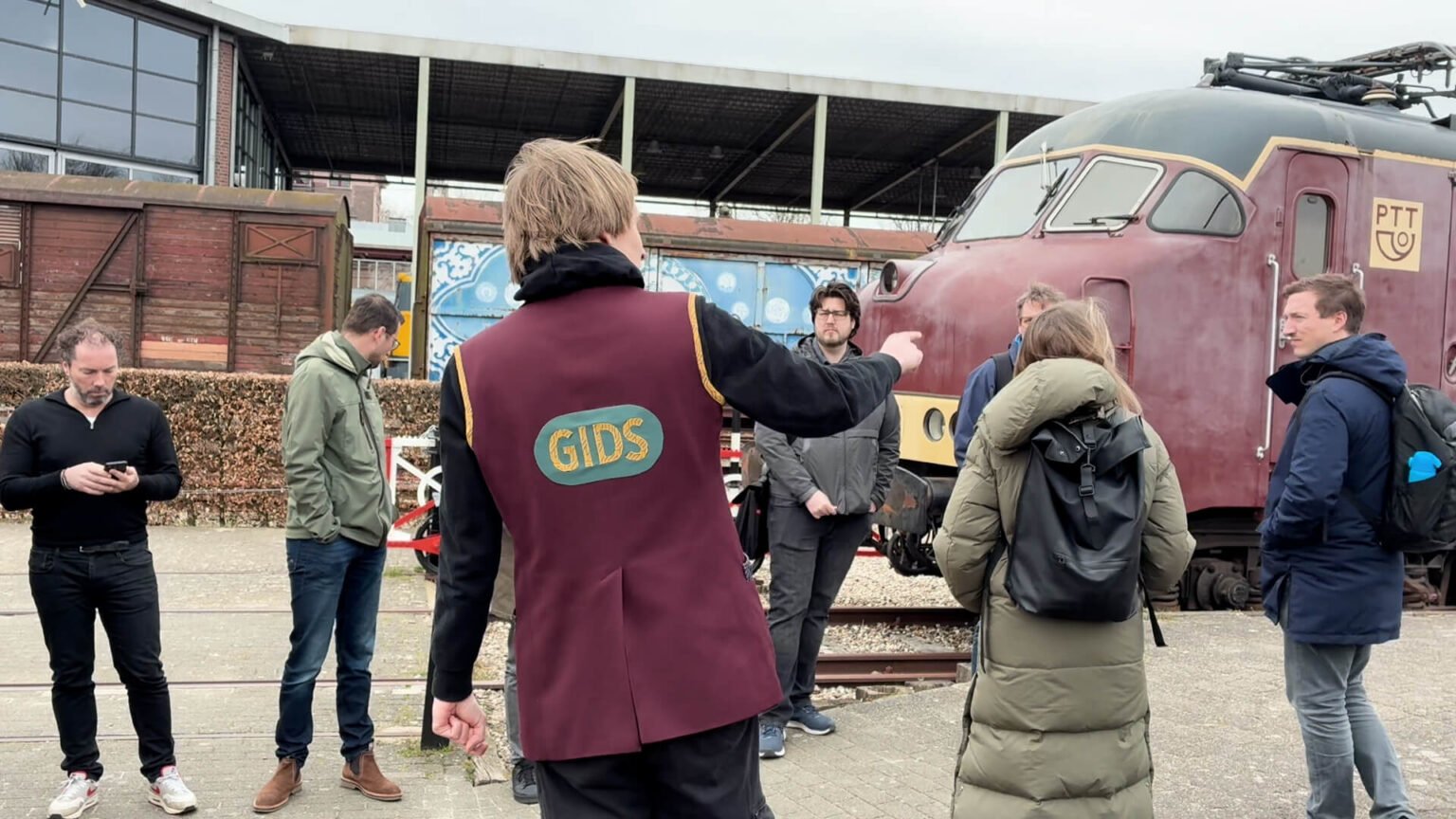
Surrounded by historic trains and the story of Dutch railway development, the setting provided a fitting backdrop for discussions on the future of infrastructure.
The tour offered a moment to reflect on how infrastructure evolves over time—shaped by technological progress, societal needs, and changing priorities. It also reinforced the importance of maintaining and adapting existing assets, a central theme of the SUBLIME project.
Looking Ahead
As the project moves forward, the focus will increasingly shift toward integration and application. With strong collaboration between academia and industry, SUBLIME is well positioned to deliver tools and insights that support more sustainable, reliable, and informed infrastructure management.
The next annual meeting will take place on 19 March 2027, hosted by the Dutch Drone Company at RDM in the Port of Rotterdam.
Until then, intermediate meetings and ongoing collaboration will continue to drive progress across all work packages.